God at the center. Outcomes over promises.
I paid the tuition
so you don't have to.
This isn't consulting. It's what I learned running real venues, making real mistakes, and spending real money to fix them.
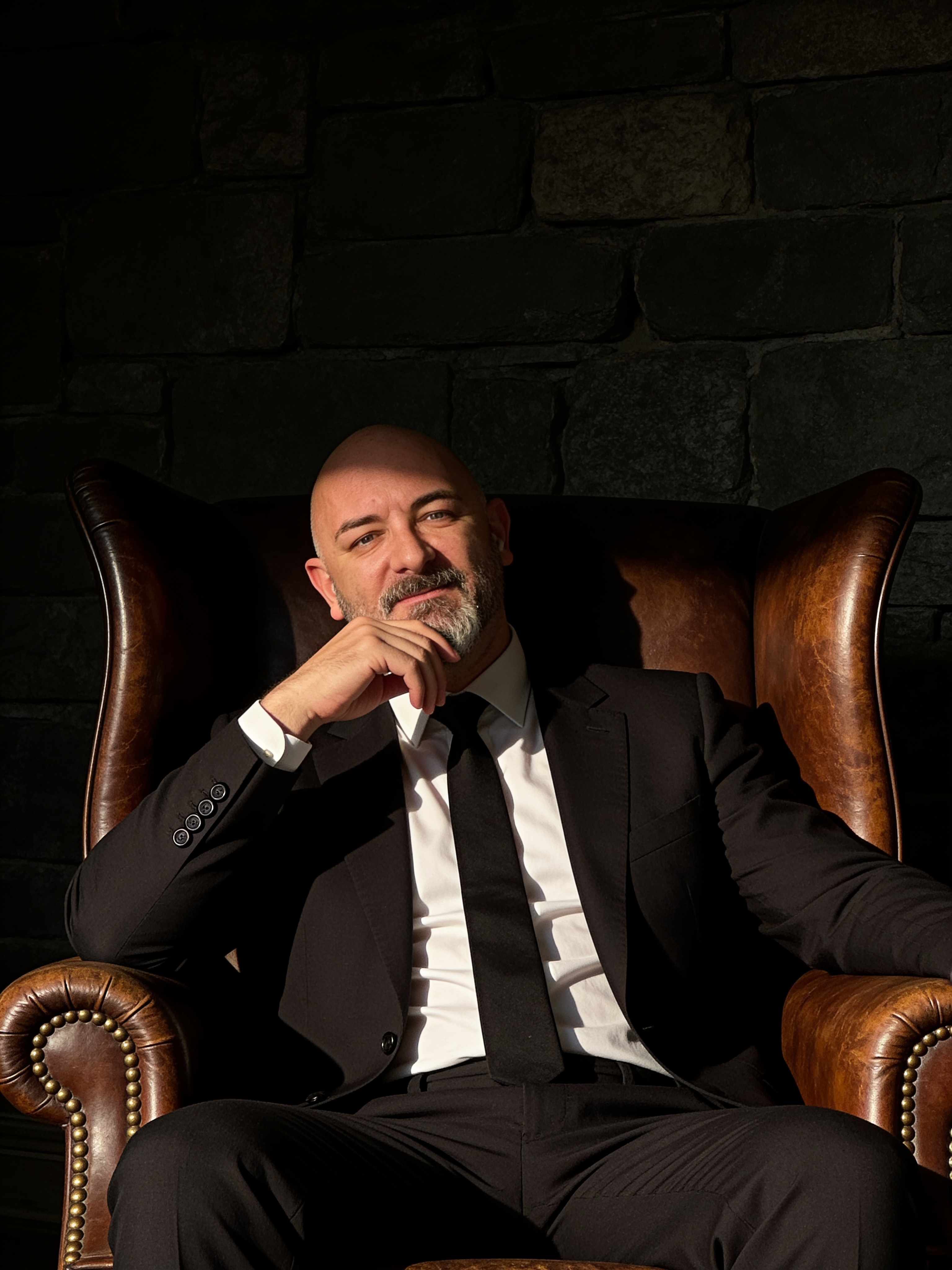
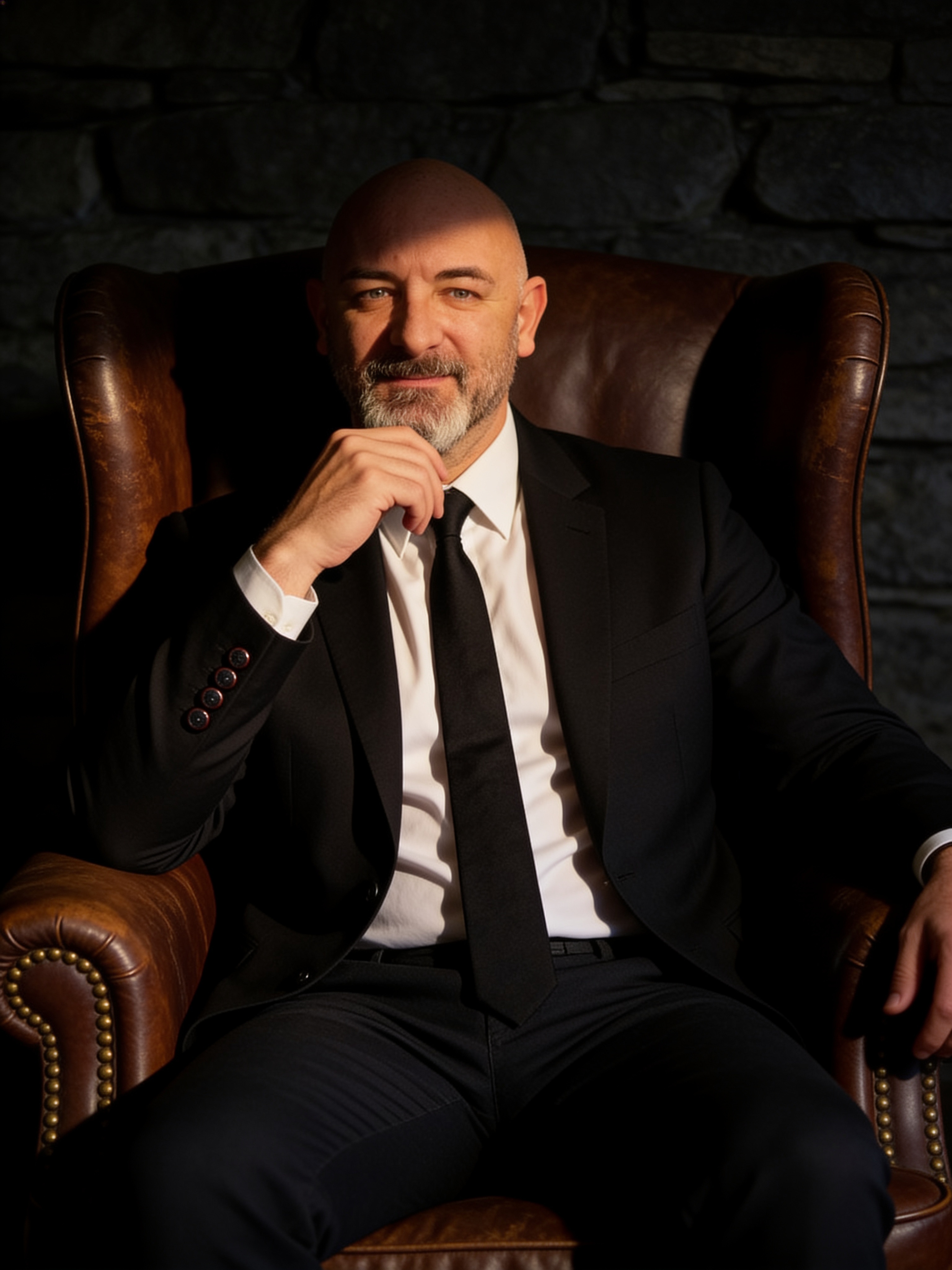
"I built this because I got tired of watching venue operators lose money on problems that were already solved."
Lukasz Rogowski · 17 years in venue operations
It was an October Friday. 9:47 PM. The ballroom held 340 people that night and every one of them was in that room.
Not for the event we'd planned — for something else entirely.
The catering company had shown up to load in. The DJ had arrived early. The client's grandmother had been moved to a side room because the heating had gone out in the main hall. I was standing in the back of an empty ballroom that should have had 200 guests in it, trying to figure out how to tell a bride that her reception couldn't happen the way she'd paid for it.
And then the venue owner's son — the one who'd been asking questions all week about why the bookings kept falling through — came back and said: "I think we need to talk about what's actually happening here."
That was the night. Not a metaphor. Not a story I invented later.
That was the night I learned that chaos isn't a personality problem. It's a system problem. And if you don't solve the system, it doesn't get better. It compounds.
My journey in venue operations started in the Orlando FL market under the Crystal Ballroom brand — venues in Fort Lauderdale and Rock Hill SC still operate under that brand today. Over 20 years of building, learning, and occasionally getting it wrong.
Crystal Ballroom Charlotte was a franchise operation I helped launch, not something I owned directly as my own venue. It went well. And then I made an intentional decision to change direction. Franchising meant locking each venue's creative flow and DNA to a single system — and that was exactly what I didn't want for the industry. Each venue owner has a passion and an identity, and forcing them into someone else's box was the wrong model.
The pivot to consulting was deliberate. It let me help all kinds of venues without forcing them to become something they weren't. The Yorkmont — a venue we actually operated — became the proof that consulting and systems work: the documented ops, the inquiry pipeline, the marketing playbook, opened without chaos. 62% less marketing spend. Calendar filled in months we'd written off entirely.
By the time I'd been at this for 17 years, I had the receipts: real revenue data, real pricing models, real pipeline systems. Not theory. Not consulting polish. The actual systems built from operating venues that were doing well — and learning from the ones that weren't.
The tuition wasn't just money. It was time. Opportunity. By the time I understood what I was doing, I'd already paid for it several times over. That's what this work is. I'm handing you the receipt so you don't have to keep paying.
Five principles that took seven figures and multiple venue failures to learn:
-
01
Your best coordinator leaving isn't a personnel problem — it's a documentation problem.
Every person who leaves your venue takes something with them. If it's not documented, it's gone. That six-month rebuild? It was preventable. The playbook we ship now includes a 30-day handoff protocol for every role — so the knowledge doesn't live in a person.
-
02
A second venue before the first one has documented ops doesn't double your opportunity — it doubles your chaos.
Expansion without infrastructure doesn't scale your revenue. It scales your problems. The Yorkmont taught me this the hard way — 14 months of two teams doing things two different ways. The expansion framework we use now doesn't recommend growing until your first venue can run without you in the room.
-
03
You don't have a marketing problem. You have a follow-up problem.
2,400 leads. That's what we generated before we had a proper nurture sequence. I know the exact number because I can see exactly how many came back. It was not enough. The 14-touch sequence we built after that failure is the reason we now process 74,000+ inquiries with a measurable conversion rate — not a hope and a prayer.
-
04
Your pricing is costing you more than you think.
For the first three years I priced by gut feel. I thought I was being responsive to the market. I was leaving an estimated $380K on the table. Not a typo. That's the number that came out of the pricing model we built after — once we had actual data instead of guesswork. The calculator we include now is the one that corrected that.
-
05
The system is the asset — not the building.
Most venue operators build a business and then try to build a sellable asset. I did it the other way around — I built operations that were documentable, replicable, and worth something. That's why Crystal Clear exists as a product. Not because I'm a great salesman. Because the systems are real and they work and you can replicate them without me being in the room.
You might have noticed the tagline: God at the center. Systems that scale.
Most businesses put the mission statement somewhere in the back of the website. We put it in the nav.
That's not an accident.
The reason I'm this transparent — the reason I tell you exactly what things cost, what failed, and what the fix was — is because of what I believe about where those lessons came from. I don't think I figured this out because I'm smart. I think I was given the failures for a reason, and I think the reason was so that I could hand the learning forward instead of hoarding it.
That changes what you owe the person sitting across from you. It means you don't sell a playbook you haven't used. You don't recommend a system you haven't bet your own operation on. You don't write an email sequence that sounds like it came out of a marketing textbook.
The transparency isn't a brand strategy. It's a consequence of faith being the actual center of the work, not a line I added to the website to be trustworthy.
If that matters to you — and I know it does for a lot of the operators who find their way here — I want you to know it wasn't added. It was always there. It's the reason CrystalClear looks the way it looks and sounds the way it sounds.
Four failures, named honestly. The receipt is the point.
-
~80K
The vendor contract I didn't read carefully enough
2014 · Second venue expansion. The catering partner had exclusivity language I didn't catch — locked us into a provider who couldn't handle Q4 volume. Three consecutive weekends with visible catering failures in front of clients. Lost two referral relationships worth five bookings a year each. Seven months to fix the contract. The solution: a 22-point vendor contract checklist reviewed by someone outside the relationship, plus a quarterly risk register.
-
~60K
The staffing collapse that almost ended a quarter
2017 · The Yorkmont. Our lead coordinator left in August. She'd been the informal hub for three other team members — when she left, none of the institutional knowledge went with her. Within six weeks, two events where the run-of-show was wrong because no one had updated the master briefing document. One client asked for a partial refund. We gave it. $60K estimated in repeat and referral business — the person wasn't the problem, the absence of a documented handoff was. The fix: a 30-day role handoff protocol, a living SOP library, and a mandatory knowledge-transfer checklist before every key exit.
-
~380K
The three years I priced by gut feel
2019 · Crystal Ballroom Charlotte (franchise). I helped the franchise operator talk to competitors, scan public pricing, adjust quarterly. What they didn't have was a model. They didn't know the actual cost per event or which packages were margin-positive versus subsidized. First real pricing analysis: $380K left on the table over three years. Not a typo. Fixed it the following quarter with an actual model — hit the franchise's highest-margin Q3 on record. The fix: a structured pricing model built on cost-per-event data, package margin analysis, and a seasonal yield framework with quarterly recalibration.
-
2,400
The leads that came in and never heard from us again
2016–2018 · All venues. We ran Facebook ads, Google Ads, WeddingWire promoted listings — spending real money, generating real traffic, converting nothing. Not because the leads weren't interested. Because we had no follow-up sequence. People would inquire, we'd respond once, they'd go quiet, we never followed up. We had no system to. The fix: a 14-touch inquiry nurture sequence, a lead scoring model, and a pipeline system that tracks every inquiry to booking or archive — with automated reminders for anything that goes quiet beyond the SLA threshold.
So what is CrystalClear, in one sentence?
The systems I used to run multiple 7-figure venues — packaged so you can implement them without starting from scratch.
Not consulting. Not a course. A set of documented playbooks — the same ones that ran Crystal Ballroom, The Yorkmont, and the rest of the operation. Sales structure, ops frameworks, marketing engine, brand systems. Everything I had to learn the hard way, organized so you don't have to.
74,772
Inquiries processed through the marketing engine
17
Years running real event venues
41%
Operating margin, fully systemized
4
Venues built and operated
Ready to skip the tuition?
Book a 30-minute discovery call. No pitch. Just a conversation about where you are and whether the work makes sense for your situation.
Book a Discovery CallOr start with the free guide — the receipt for what this work costs.